Pick a tune that fits
Twenty tunes span beginner folk songs, slow airs, polkas, jigs, reels, and hornpipes. Start with three notes or jump to a session set.
A tin whistle practice app for iPhone and iPad
Learn your first three notes, play a complete tune, and keep going through airs, jigs, reels, and ornaments until you have music you can share. Five chapters, twenty tunes, and a microphone that listens at your pace.
In development. Built by one developer, and so far tested mostly by me. There is no public App Store release yet.
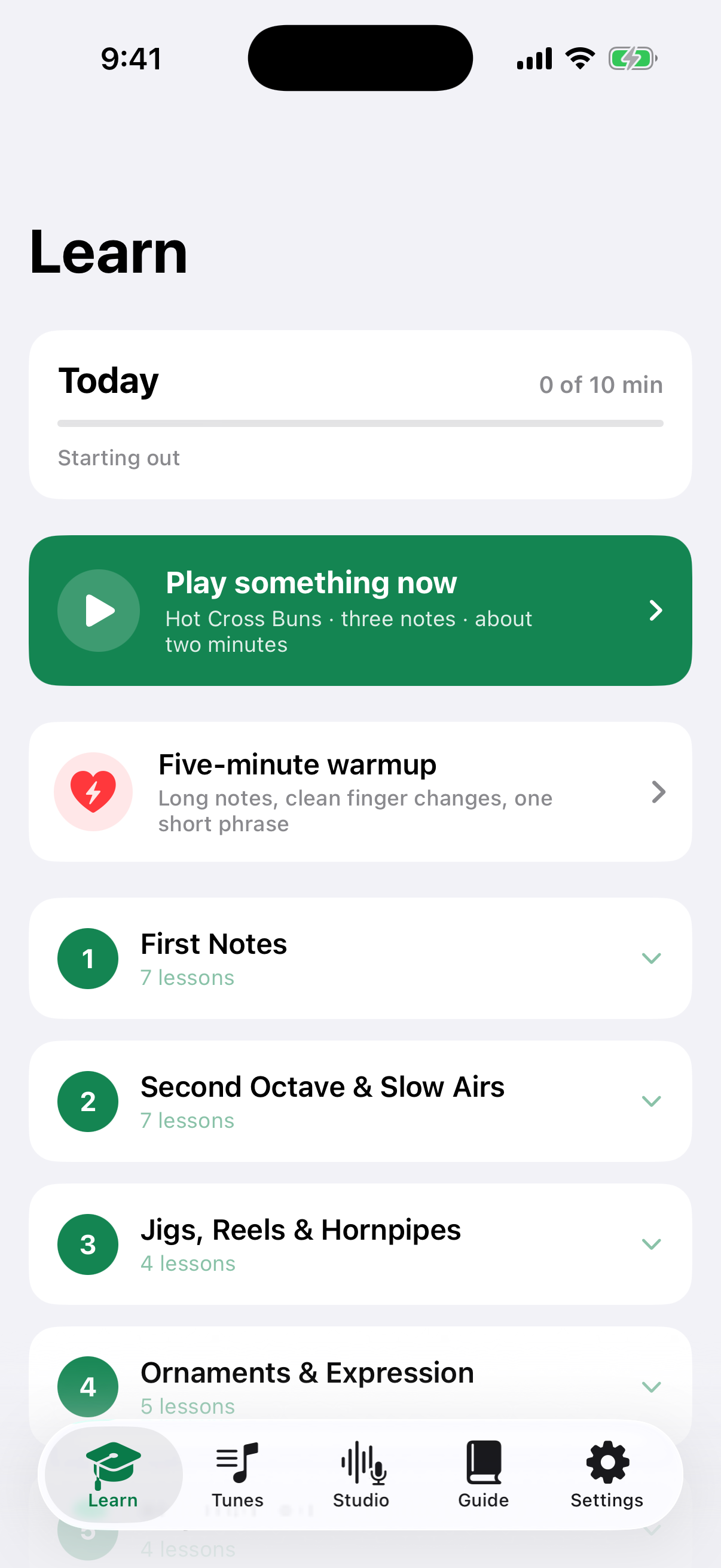
Start with music. The first button opens a three-note tune.
Use your own whistle. Pitch feedback runs on the device.
No account required. Progress and recordings stay local.
How practice works
The app is a practice companion, not a substitute for listening, teachers, or other musicians.
Twenty tunes span beginner folk songs, slow airs, polkas, jigs, reels, and hornpipes. Start with three notes or jump to a session set.
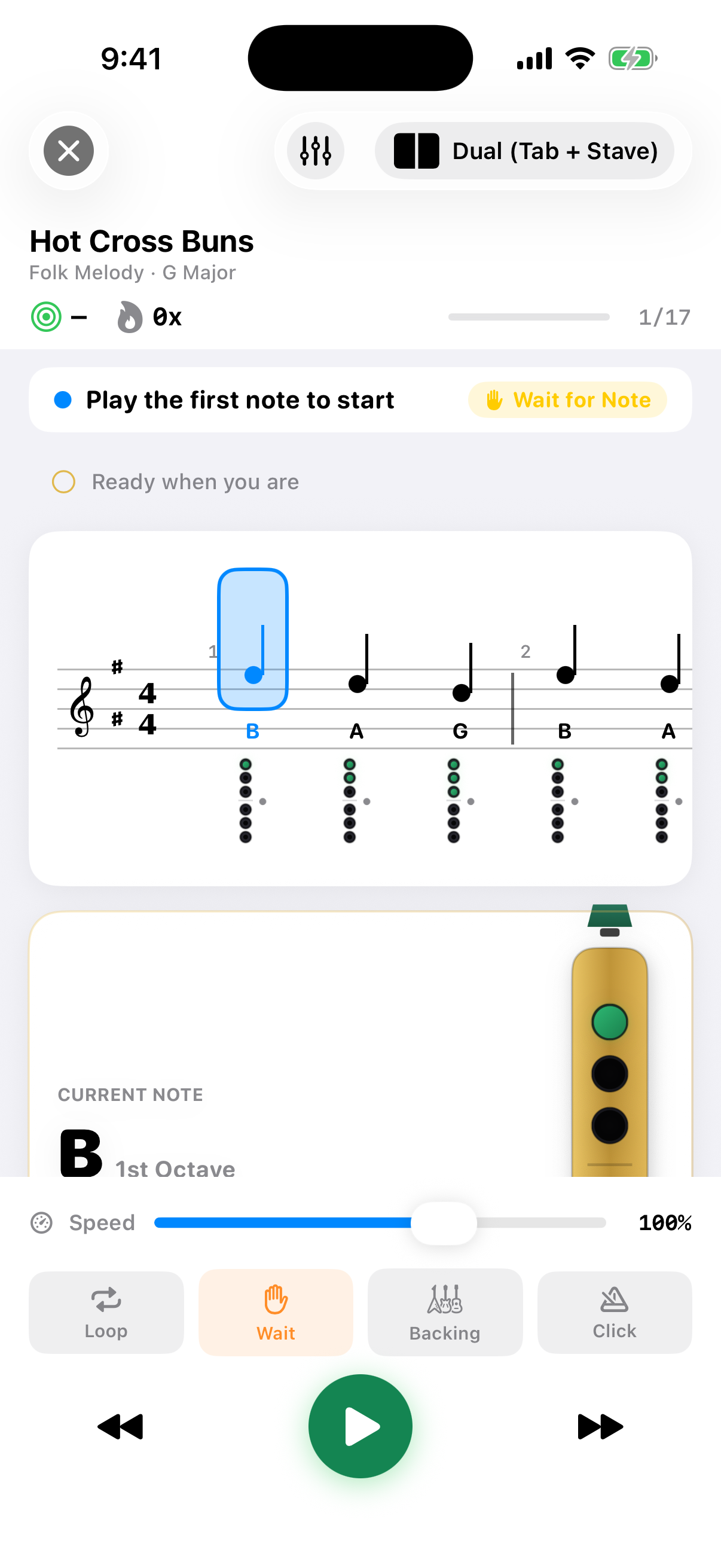
Read six-hole fingering diagrams, staff notation, or both together. Explore every note in the interactive fingering guide. Tune up with the built-in chromatic tuner.
Wait-for-note mode listens for the right pitch. Flow mode keeps time. Add a metronome click or a full backing band with bodhrán, guitar, bouzouki, strings, and drone.
What is in the current beta
Play with other people
Pick two or three tunes you genuinely like—The Kesh Jig, Cooley's Reel, Morrison's, whatever suits you. Practice them in short phrases, rely less on the screen each time, and put them together as a small set of your own.
The later lessons cover how tunes are called at a session, why local versions differ, when to listen, and how to join without playing over everyone else.
Questions
A standard high D whistle is the simplest match for the lessons. An inexpensive Waltons, Clarke, Generation, or similar whistle is enough. The app includes a buying guide with recommendations. Upgrade after you can describe what you want to change.
No. Six-hole fingering diagrams are available for every tune, and the app can show them beside staff notation if you want to learn the connection gradually.
Twenty. Four beginner folk songs, five slow airs, six dance tunes (polkas, jigs, and a hornpipe), five advanced reels and slip jigs, and five film themes. The library will grow.
Live practice audio is analyzed on your device and is not saved. The separate Recorder saves a file locally only when you choose to record. Nothing is uploaded by the pitch detector.
Not yet. A small TestFlight beta is running. Email me if you would like to try it.
Help shape the beta